
KEWI, SATO Technology Take Centre Stage at World Water Week 2026
The Kenya Water Institute (KEWI) used this year's World Water Week to spotlight how SATO sanitation technology has transformed access to safe, dignified toilets in rural and peri-urban Kenya, crediting the Institute's own technical and capacity-building role as central to the technology's uptake at the grassroots.
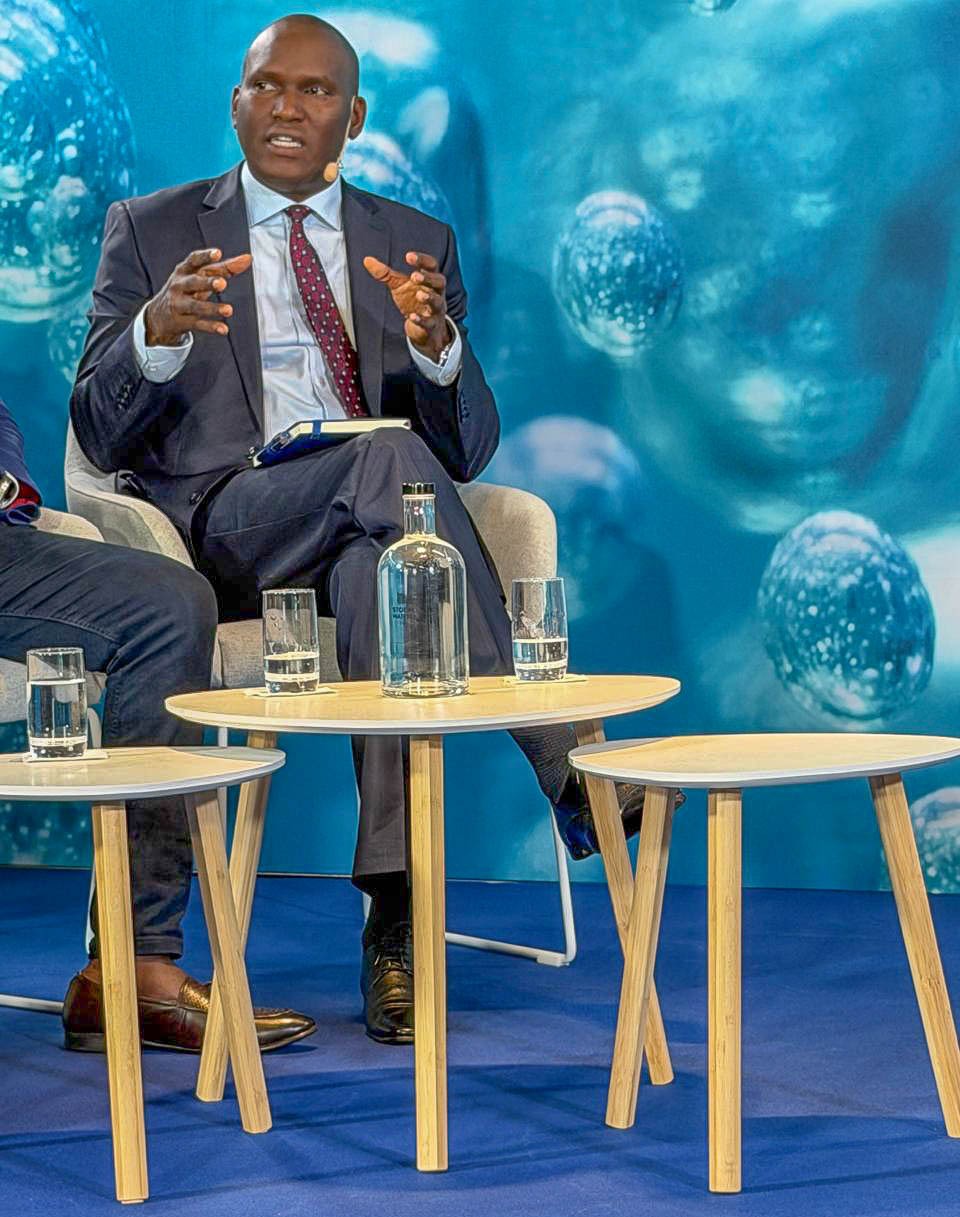
Speaking during a live studio talk show session at the Stockholm Waterfront Conference Centre on August 24, 2026, KEWI Chief Executive Officer Dr. Solomon Leiro Letangule joined a panel of experts to discuss "Decentralized Sanitation for Decent Livelihoods in Rural and Peri-Urban Areas in the Global South." The session, listed under Session ID 12533, was hosted by KanikaGroeneweg-Thakar, Environment and Climate Advisor at the Swedish Red Cross and the Stockholm International Water Institute (SIWI).
SATO, whose brand promise is: A Better Life, Every Day," is a low-cost sanitation product developed by LIXIL that fits onto pit latrines to create a hygienic, easy-to-clean toilet with a trapdoor mechanism that seals off odour and flies without requiring water or electricity. The technology has been positioned globally as a practical bridge for households that cannot afford full sewered systems but still need a safe, private toilet.
In Kenya, KEWI has been the driving institutional force behind rolling out SATO Pan Pit Latrines at scale. Under the "Improving Public Health and Enhancing Technical Skills of Youth in Kenya through Sanitation Technology Transfer Project," the Institute led the deployment of SATO Pan Pit Latrines alongside Green Toilet System (GTS) Dehydrating Toilets across four pilot counties.
The Director has previously emphasized that the project should combine innovation with wider knowledge transfer. In a KEWI update on the sanitation technology transfer program, Dr. Letangule said, “We continue to conduct research and come up with innovative ways of enhancing sanitation across the country.” He also said, “We are looking at how we can now scale it up and extend it to other counties in the country.”
On public health, the project directly addressed one of rural Kenya's most persistent gaps: households in these areas have historically relied on unimproved pit latrines that expose families, especially children, to faecal-oral disease transmission. By retrofitting existing pits with SATO's sealed, odour- and fly-proof pan, KEWI enabled communities to convert unsafe latrines into hygienic facilities without the cost of full sewered infrastructure, cutting a major pathway for diarrhea and other sanitation-related illnesses.
On livelihoods, the project's technical training component meant KEWI did not simply hand over hardware — it built a generation of young technicians within the pilot counties equipped to install, maintain, repair and eventually locally manufacture sanitation components. This created a home-grown skills base and small-scale employment opportunities tied directly to the sanitation value chain, giving youth a stake in sustaining the technology long after the project's formal end and turning a public health intervention into a source of decent work.
Organizers of the session noted that overall sanitation coverage across the Global South remains critically low, largely because centralized, sewered infrastructure is capital-intensive and confined mostly to major urban centers, leaving rural, peri-urban and informal settlements un served. SATO-based solutions, championed in Kenya through KEWI's implementation, were presented as proof that decentralized sanitation can close this gap immediately and affordably, delivering public health protection, decent livelihoods and economic inclusion simultaneously.
Dr. Letangule was joined on the panel by Alex Njagi, Leader for Kenya-SATO at LIXIL, and Samuel Blazyk, Officer-in-Charge Coordinator of the African Water Facility at the African Development Bank, whose institution has supported decentralized sanitation efforts on the continent. The presence of both LIXIL and KEWI on the same panel underscored the partnership between the technology's developer and the Kenyan institution responsible for adapting and rolling it out on the ground.
For KEWI, the Stockholm platform offered a chance to showcase Kenya's SATO experience as a model other Global South countries could replicate, reinforcing the Institute's role not just as an implementer but as a hub for sanitation technology transfer and youth technical training in the region.