
SATO/LIXIL and KEWI Explore Expanded Partnership on Sanitation Innovation and Humanitarian Initiatives
The Kenya Water Institute (KEWI) has reaffirmed its commitment to advancing sanitation innovation, research, and humanitarian interventions through strengthened collaboration with SATO/LIXIL following a high-level consultative meeting held in Nairobi. The engagement underscored a shared vision to deepen cooperation within the water, sanitation, and hygiene (WASH) sector, with a strong emphasis on scaling sustainable solutions, strengthening institutional capacity, and expanding access to improved sanitation services.
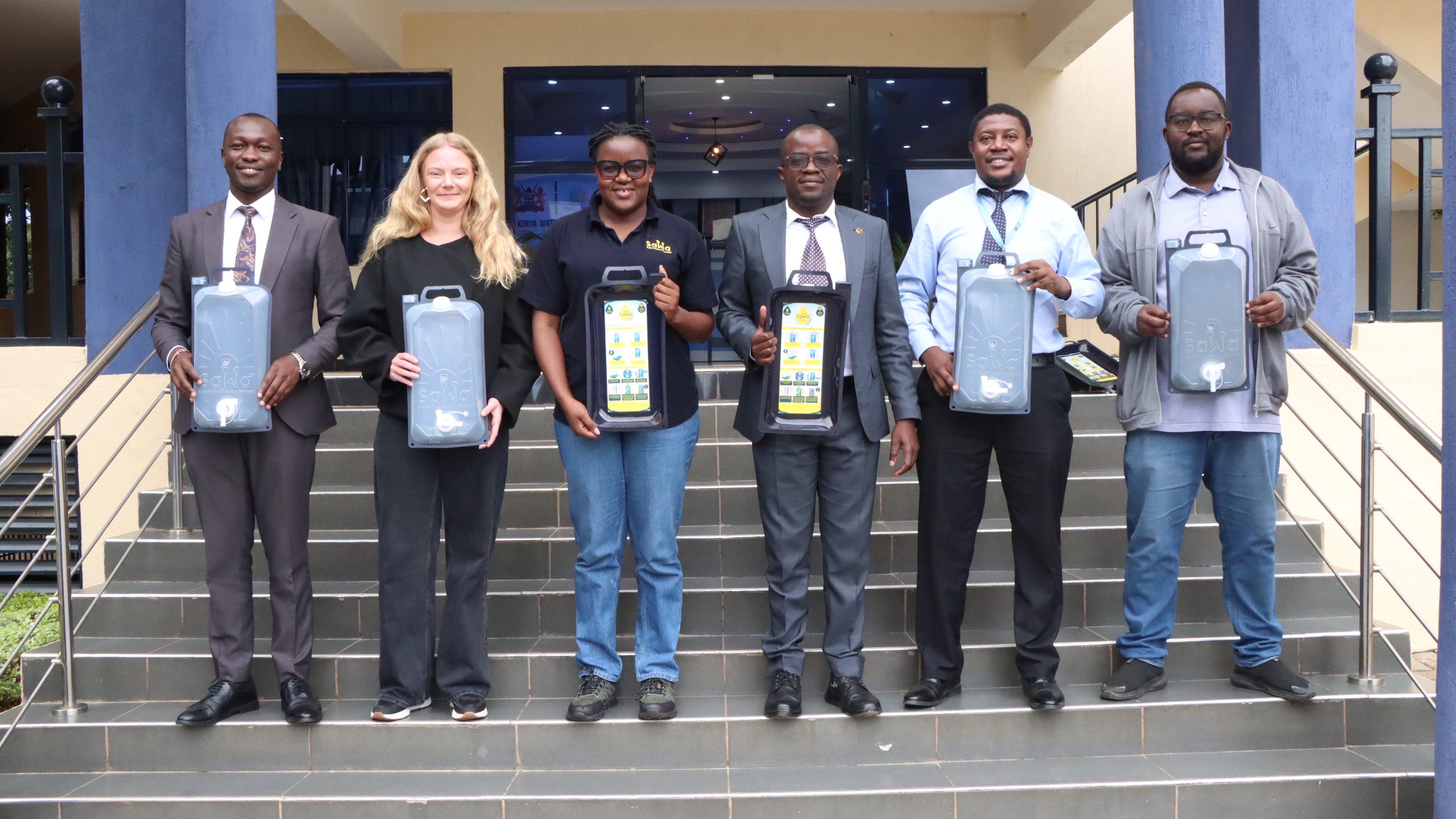
The meeting brought together Mr. Keith Cole, Leader for Humanitarian and Multilateral Business, and Ms. Rana Abdel Sattar, Leader for Business Development and Innovation Support (Humanitarian), from the SATO/LIXIL USA Office, who were in Nairobi for the annual AidEx event. Discussions focused on reviewing progress made under existing joint initiatives and identifying new opportunities to broaden collaboration in sanitation innovation, research, and humanitarian programming.
A key outcome of the engagement was renewed momentum toward the development of a Memorandum of Understanding between KEWI and SATO/LIXIL. The proposed agreement is expected to formalize cooperation in capacity building, applied research, innovation, technology transfer, and knowledge exchange, while also strengthening professional competencies and supporting the development of sustainable sanitation solutions.
The discussions also highlighted several strategic initiatives, including the production of a documentary to showcase the impact of the African Development Bank-supported sanitation project. The documentary is expected to document achievements, capture lessons learned and demonstrate the project’s contribution to improving sanitation access and livelihoods, serving as both an advocacy and knowledge-sharing resource.
Another major area of focus was the proposed establishment of a Sanitation Hub at KEWI. The hub is envisioned as a center of excellence for sanitation research, innovation, training, technology demonstration, and stakeholder engagement. It will provide a collaborative platform for researchers, students, practitioners, policymakers, and development partners to jointly develop and promote sustainable sanitation solutions.
The two institutions also explored opportunities for KEWI’s integration into SATO’s humanitarian initiatives. This collaboration is expected to leverage KEWI’s technical expertise, training capacity, and research strengths to support sanitation interventions in emergency and humanitarian contexts, particularly in reaching vulnerable and underserved communities.
Speaking during the meeting, KEWI’s Senior Deputy Director for Research, Strategy and Business Development, Dr. Evans Ayao, reiterated that sanitation remains a key priority for KEWI alongside its core mandate in water education, training, and research. He commended SATO/LIXIL for its continued partnership and successful implementation of sanitation projects that have delivered tangible benefits to communities, while also encouraging the expansion of interventions into rural areas to enhance access to improved sanitation technologies and services.
Dr. Ayao further emphasized KEWI’s interest in expanding collaboration to include governance training programmes within the water and sanitation sector, noting that such initiatives would play an important role in strengthening institutional capacity, accountability, and service delivery across the sector.
Looking ahead, both institutions expressed strong commitment to several forward-looking collaboration priorities aimed at accelerating impact. These include scaling up sanitation technologies piloted in Kisumu, Kitui, Tharaka Nithi, and Kajiado counties, with the intention of expanding deployment of SATO pans and GTS solutions across all counties in Kenya and ultimately beyond the country. They also agreed on the importance of developing a joint strategy to showcase the KEWI–SATO partnership and the impact of SATO sanitation technologies at a COP 30 side event, positioning the initiative for global visibility and policy engagement.
In addition, plans were discussed to establish designated SATO technology laboratories across KEWI campuses in Nairobi, Kisumu, Kitui, and Chiakariga. These facilities are expected to serve as demonstration and training centers for water utilities and professionals, supporting practical learning, technology adoption, and wider dissemination of innovative sanitation solutions.
The KEWI team further indicated that priority will be given to the development of a detailed action plan anchored on these collaboration pillars, beginning with the consolidation of technical and operational results from the ongoing KEWI–African Development Bank-supported pilot project. Where necessary, the institutions also intend to develop a formal working document to guide and operationalize the partnership framework.
Overall, the engagement reaffirmed the strong partnership between KEWI and SATO/LIXIL and their shared commitment to advancing innovation, strengthening capacity, and expanding access to safe and sustainable sanitation solutions. The collaboration is expected to contribute meaningfully to improved public health outcomes, environmental sustainability, and broader socio-economic development at both national and global levels.