
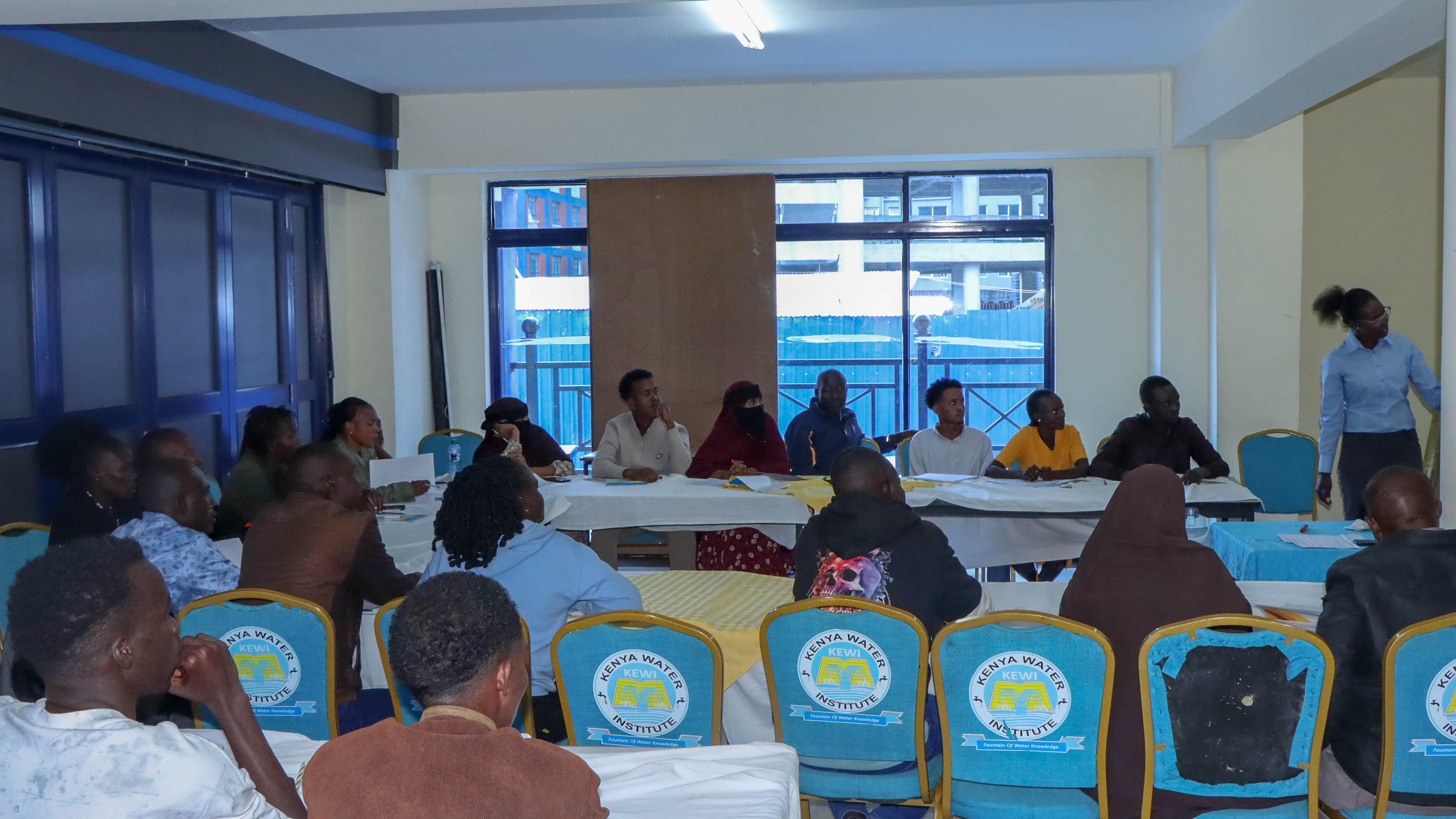
KEWI Leads Capacity Building on Solarised Borehole Systems for Turkana and Garissa Counties
BY. Pius Kimani
The Kenya Water Institute has commenced a 12-week intensive training programme targeting personnel drawn from Turkana and Garissa counties, with a strong focus on enhancing employability and job creation opportunities in the Water, Sanitation and Hygiene sector. The programme prioritises young people from both forcibly displaced populations and host communities, addressing long-standing skills gaps through structured technical training, certification, and work-readiness support.
The training, which is currently underway at KEWI’s Nairobi Campus, covers critical technical areas including solarised borehole systems, water systems operation and maintenance, plumbing and water distribution, basic electrical safety, water quality testing, and WASH service management. This technical component is complemented by soft skills development, entrepreneurship training, and work-readiness preparation to ensure participants are not only technically competent but also equipped to transition into employment or self-employment within the WASH labour market. In addition, the programme integrates Recognition of Prior Learning to formally certify experienced artisans who have acquired skills informally but lack recognised qualifications.
This initiative is an outcome of a comprehensive Training Needs Assessment conducted last year, building on groundwork laid by UNICEF and the Korea International Cooperation Agency, who supported the drilling and equipping of solar-powered boreholes across remote areas of Turkana and Garissa counties. The TNA identified critical gaps in human resource capacity, despite significant investments in water infrastructure, and recommended a phased, competency-based training model combining residential instruction, field attachments, mentorship, and certification.
Through alignment with KEWI’s Long-Term Agreement with UNICEF, the training seeks to strengthen local WASH labour markets, improve system functionality, and enhance youth livelihoods while contributing to inclusive and climate-resilient water service delivery in arid, semi-arid, and refugee-hosting contexts. The programme responds to persistent challenges such as frequent borehole breakdowns, weak operation and maintenance practices, limited water quality monitoring, and governance constraints at both community and utility levels, largely attributed to shortages of trained and certified technicians.
Turkana and Garissa counties host two of Africa’s largest refugee settlements, Kakuma/Kalobeyei and Dadaab, where limited access to post-primary education, certification, and market-relevant skills continues to constrain youth socio-economic integration. At the same time, studies indicate chronic non-functionality of boreholes, acute shortages of certified solar-borehole artisans, high youth unemployment and NEET rates, and a rapid expansion of solarised water supply systems as services transition from humanitarian to county-managed models.
The training therefore places strong emphasis on evaluating the functionality, management, and sustainability of solar-powered boreholes supplying water to thousands of residents, with core technical priorities including photovoltaic system sizing and installation, controllers and inverters, pump installation and servicing, HDPE pipeline welding, leak management, storage tank installation, and preventive operation and maintenance.
KEWI, in collaboration with UNICEF and county governments, is strategically positioned to deliver structured training, certification pathways, and community engagement programmes that translate infrastructure investments into sustainable service delivery. Effective capacity building is expected to reduce non-revenue water, minimise equipment downtime, strengthen governance, and support the establishment of resilient WASH systems, fully aligned with national development priorities, UNICEF programme objectives, and Sustainable Development Goal 6 on clean water and sanitation.