
Canada–Kenya Roundtable Marks a New Era for Water Utility Resilience
BY: Pius Kimani
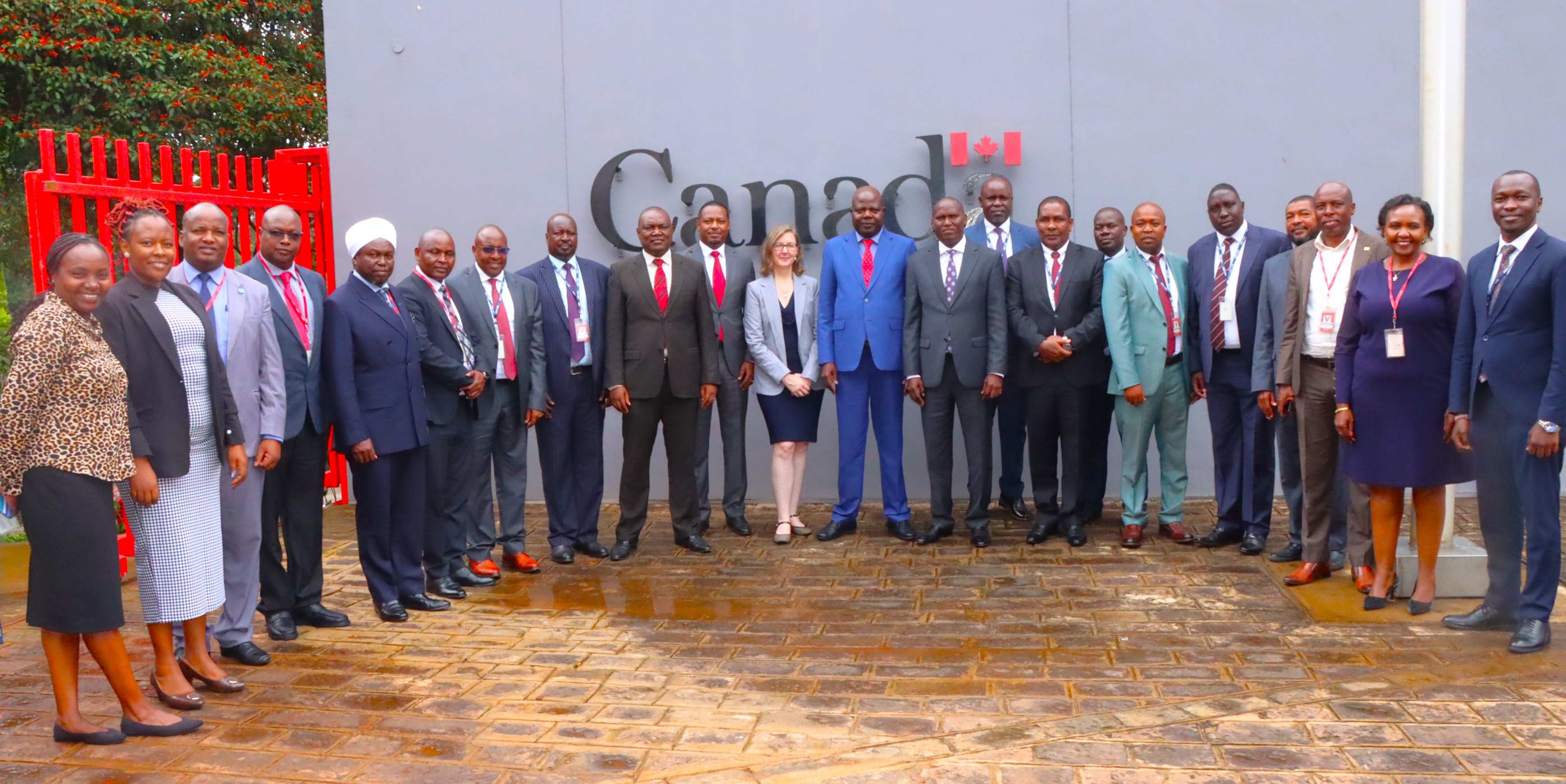
The Kenya Water Institute (KEWI), in partnership with the High Commission of Canada in Kenya, recently hosted the Canada–Kenya Water Sector Roundtable at the Canadian Embassy in Nairobi, bringing together water service providers, development partners, and sector stakeholders to chart a path toward more resilient, efficient, and financially sustainable water utilities. The forum provided a platform for candid discussions on operational challenges, capacity gaps, and innovative solutions to strengthen Kenya’s water sector.
Engineer S.A.O Alima, the Water Secretary and chief guest, hailed the roundtable as a pivotal gathering for practical collaboration. “Looking around this room, I see the individuals and institutions charged with driving the transformation of Kenya’s water sector. Your presence reflects a shared commitment to move beyond policy dialogue and towards actionable solutions that strengthen service delivery across the country,” he remarked. He emphasized that access to safe water is a fundamental human right and a key enabler of Kenya’s broader development agenda, including the bottom-up economic transformation agenda and Vision 2030.
The discussions highlighted some of the sector’s most pressing challenges, chief among them high Non-Revenue Water (NRW), which currently stands at 44 percent annually. This persistent loss undermines operational efficiency and financial sustainability, with aging infrastructure, leakages, inaccurate meters, and illegal connections contributing to the problem. Participants noted that addressing NRW requires both technical expertise and investment in modern monitoring and leak detection technologies.
Equally urgent is the need to strengthen asset management across water infrastructure. Many pipelines and treatment facilities have exceeded their intended lifespan, and without robust predictive maintenance and modern monitoring systems, utilities risk premature deterioration and rising operational costs. Utilities also reported low water and sanitation coverage, particularly in urban areas and informal settlements, where inadequate last-mile connectivity and sewerage infrastructure limit service expansion. Climate variability, population growth, and water resource constraints further compound these challenges.
Operationally, utilities highlighted difficulties in detecting and managing water losses, accurate data collection, asset maintenance, expanding customer connections, and improving wastewater management. The lack of reliable real-time data remains a major constraint, with many utilities still relying on manual monitoring.
The roundtable revealed that these challenges stem from a combination of skills gaps and limited access to modern technologies. Utilities underscored the need for training in leak detection, NRW management, water balance analysis, GIS mapping, data analytics, wastewater treatment, and resource recovery. At the same time, access to advanced tools such as smart water meters, automated monitoring systems, digital network mapping, and AI-driven water management remains limited, while high costs and insufficient financing restrict technology adoption.
Participants identified several technologies as either underperforming, unaffordable, or largely unavailable, including smart metering, satellite-based water loss detection, energy-efficient pumping systems, and advanced digital monitoring platforms. Financing constraints, limited government subsidies, and structural barriers further hinder utilities’ ability to rehabilitate infrastructure, expand services, and adopt modern solutions.
The forum provided a unique opportunity to explore collaboration with Canada, whose expertise in water governance, climate resilience, smart systems, and infrastructure management offers valuable potential to support Kenya’s water sector. Dr. Leiro Letangule, KEWI Director/CEO, emphasized KEWI’s role as a bridge connecting global expertise with local needs. “Our objective is to catalyse partnerships, ensuring that knowledge and resources shared by international partners are effectively translated into practical solutions that strengthen utilities and improve service delivery,” he said.
The roundtable marks the beginning of a strengthened partnership between Canada, KEWI, and Kenya’s water sector, aimed at building operationally efficient, financially sustainable, and resilient utilities. Participants agreed that tackling the sector’s challenges requires coordinated investments in infrastructure, human capital, and technology, supported by strong governance and innovative financing models.
By fostering collaboration, sharing global best practices, and equipping utilities with the skills and tools needed to optimize performance, this partnership is poised to enhance water security and sanitation services across Kenya, delivering tangible benefits to communities nationwide. As KEWI continues to lead capacity development and knowledge transfer, the roundtable represents a critical milestone in achieving sustainable, economically viable, and resilient water utilities for the country.